With the rapid evolution of AI around us, everything is transforming, even the simple ways that we quench our thirst for information—the way we search for it online. Search is no longer about opening and browsing links; it has transformed (and, quite luckily for us, to) getting instant, direct, AI-generated answers to our queries.
All of this has become possible thanks to Generative AI, which is quickly reshaping how people explore information. It has also led to the emergence of a completely innovative strategy called Generative Engine Optimization (GEO).
This blog takes you through GEO’s journey of transforming SEO. It also helps you learn more effective ways to create content that helps you stand out in the modern, AI-driven, competitive search landscape.
What is Generative AI in Search?
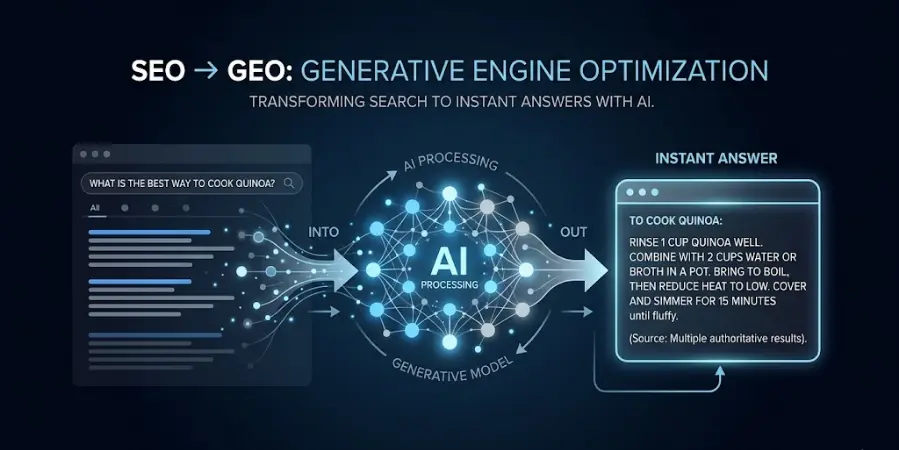
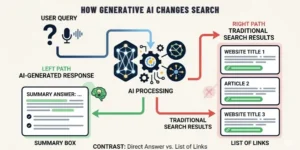
In simple terms, Generative AI in search means using AI to generate direct, more human-like answers to user queries, rather than displaying links to websites as results. This has completely transformed how search engines work, enabling them to understand the context of a user’s query and deliver information instantly and in summary form.
- Generative AI better understands user intent and interprets natural language queries more accurately.
- It generates direct responses to those queries as short summaries, explanations, and suggestions in real time!
- It has reduced the need for “clicks”, providing users with instant information without having to visit multiple sites or open multiple pages to get answers.
What is Generative Engine Optimization?
So now that we know what Generative AI in search entails, let us move on to understanding exactly what Generative Engine Optimization is. In simple terms, it refers to the process of optimizing content so it can be crawled, better understood, and appear in AI-generated search results. After all, that is what users are looking for now, so it only makes sense to put your focus on GEO.
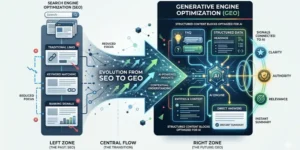
And the focus here is on the 3 Cs that help ensure your content becomes a reliable source for generative engines to display to users-Context, Clarity, and Credibility.
How Generative AI is Transforming SEO
Generative AI is quickly reshaping the way search works. The focus is clearly changing from finding the right links for your information to receiving instant answers to your queries! And this change is now transforming SEO into a more content-focused, intent-oriented strategy, too.
- Answering user queries is now prioritized over mere rankings.
- There is an absolute need to create content that is more meaningful and helpful for the users.
- Structure matters-content with headings, bullets, tables, and FAQs is easier for AI to use and list in responses.
- The way people search is becoming more conversational. Full questions are asked in place of short keyword queries.
- User search intent is king. SEO must try to understand what people want to know to stay ahead in the game.
Crafting GEO-Friendly Content: Key Components
Let’s put it this way: Designing content that is GEO-friendly means keeping it structured, clear, specific, and, most importantly, easy for AI to understand and use in generating instant responses to user queries. This is where integrating the following key elements can help craft GEO-friendly content:
| Elements | What They Mean | How They Impact |
| Structure | Organized content format | Increases chances of content selection for AI responses |
| Clarity | AI easily understands content | Better interpretation by AI in answering user queries |
| Authority | Information that can be trusted | Helps build brand credibility |
| Freshness | Regularly updated content | Helps maintain and even improve rankings |
| Relevance | Aligns with user search intent | Helps boost brand visibility |
How to Craft Content for GEO?
It may be different from what you have been doing so far, but trust me, it ain’t that difficult. All you need to do is make a small mindset shift and start writing for humans first, then AI.
Let’s understand more about what this means and how you can easily create content for Generative Engine Optimization using the simple step-by-step approach below:
- Emphasize user search intent: Take time to consider what users want to know and analyze what they search for online. Keep a conversational tone in your content as though answering their queries directly.
- Write for humans first: Search engines are now very clear about one thing-only content that is helpful, impactful, and engaging to the reader will rank. This means that stuffing keywords into the content in the desperate hope of making it rank isn’t going to work anymore.
- Follow a structured approach: Keep your content outline clear and specific for readers for AI to understand easily. Use more bullet points and tables in your content, and don’t forget FAQs.
- Work on building topical authority: Creating content clusters and pillar pages is key to adding depth to your content. This also helps ensure your page’s credibility, making you appear as the undisputed trusted source for all information in the specific domain.
- Optimize your content to appear in featured snippets: that is the ultimate goal for many brands today, and the only easy way to achieve it is to create concise, direct answers to user queries that align with their search intent. Also, using question-type headings is far better than statement types, as the former help answer user queries more directly.
The Future of SEO and GEO
Current market trends clearly point to Generative AI playing a direct and impactful role in shaping how SEO is likely to function in the competitive future landscape. One thing is crystal clear-creating meaningful, helpful, and trusted content will be the number one priority for brands, and GEO seems to play a vital role in ensuring content visibility in search experiences largely driven by AI.
Here are some key trends that can help better understand the future of both SEO and GEO:
- The quality of content will largely overshadow its quantity. Creating fewer but more impactful content pieces will carry much more weight than producing generic, low-value content.
- Search intent will rely more on instant answers. AI-generated responses to queries in real time will be the go-to for users, reducing (and gradually doing away with) the need for browsing links.
- GEO will be integrated as standard practice, with businesses incorporating it into their modern SEO strategies to improve search engine rankings.
Takeaway
When the world around you is changing and evolving fast, the trick lies in adapting to stay relevant. This is what SEO is doing too. With the rapid growth of Generative AI, we soon realized that simply optimizing content for search engines was just not enough. We needed to optimize for answers-answers that were clear and direct.
This is when SEO embraced GEO (rather than getting into the SEO vs. GEO debate) and shifted its focus to clarity, credibility, and value for the user so that it could stay visible and relevant in a search environment largely driven by AI.
Want to craft GEO-friendly content for measurable, significant results? Straction Consulting can help. Our team will guide you through every step of building a modern SEO strategy that seamlessly integrates content, AI, and technology to ensure your brand is ready for the future and remains visible in a highly competitive landscape. For more information on GEO and how we can help, call us on +91 9810430573 today.