
Have you noticed anything unusual in search traffic lately? Pages that used to get steady visitors are suddenly flatlining. Some businesses are seeing organic clicks drop dramatically – not because their content got worse, but because search itself is changing.
That’s the heart of a trend we’re all trying to understand: the AI Impact on SEO. Search giants and AI tools like ChatGPT, Gemini, Bing Chat, and AI Overviews are reshaping how people find, consume, and respond to information online.
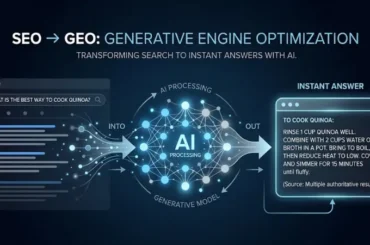
Here’s one eye-opening data point from 2025: AI Overviews now appear in around 13% of all desktop search queries and, when they do, search click-through rates can drop to just 8% compared to 15% without AI summaries. That’s nearly a 47% drop in clicks when an AI summary is shown.
Is SEO being eliminated, or is it being redefined for a world where AI sits between users and answers?
Let’s unpack that together – with real insights, real numbers, and real prognosis for businesses in 2025 and beyond.
Source: The Digital Bloom, as of October 30, 2025
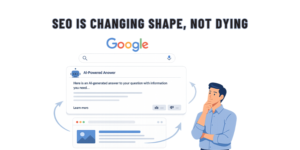
Is SEO Dying–Or Is It Just Changing Shape?
People have been saying SEO is dying for years. This time, though, the concern feels more personal. You do everything right. Content is solid. Rankings are stable. And still, traffic drops. That’s confusing. It makes you second-guess your work.
What’s actually happening is simple: answers are showing up before your page does. SEO didn’t stop working overnight. It has stopped rewarding content that exists only to explain something once and then move on.
What’s Really Happening When AI Meets Search?
To understand the future, we need to see how users behave today.
| Search Behavior Shift | What It Means |
| AI summaries show up on SERPs | Users get an answer |
| Zero-click searches rising | Traditional website visits decline |
| AI answer engines like ChatGPT and Gemini grow | More people start with conversation, not search lists |
| Organic CTR is dropping sharply | Visibility no longer guarantees traffic |
The Bottom Line:
AI doesn’t erase SEO – it changes how search works. Instead of clicking through 10 links and piecing together answers, many users are satisfied with the search results page or an AI interface powered by knowledge from multiple sources.
Yes, this feels like a threat when you look at clicks alone – but it’s also an opportunity for smarter SEO.
Why People Think AI Will Kill SEO
Most fear around AI and SEO comes from numbers without context. Traffic drops are visible. Clicks are measurable. Lost sessions trigger alarm bells. What’s harder to see is intent.
When AI gives users a quick answer:
- Curiosity is satisfied.
- Exploration ends early.
- Shallow content gets skipped.
That feels like replacement. In reality, it’s filtration. Only content with a reason to exist beyond “answering” survives.
Why AI Feels Like a Threat to SEO
AI feels threatening because it now sits where websites used to sit-right between the user and the answer. Search no longer pushes people to explore; it satisfies them early. That shift hits SEO teams emotionally and financially.
Why does it feel uncomfortable:
- Your content is used but not visited.
- Rankings stay, clicks drop.
- Effort feels invisible.
- Traffic declines without obvious mistakes.
The threat isn’t AI itself. It’s the loss of control over attention. SEO hasn’t stopped working-it’s stopped guaranteeing traffic just for showing up.
What AI Is Really Replacing (And What It Isn’t)
AI isn’t replacing SEO as a whole. It’s replacing certain types of content.
| AI Replaces | AI Doesn’t Replace |
| Definitions | Decision support |
| Basic explanations | Context-driven guidance |
| Generic comparisons | Experience-based insight |
| Surface-level how-tos | Trust and credibility |
In Short:
AI handles information well. It struggles with judgment, nuance, and reassurance. That’s where SEO still holds power, helping users move from understanding to confident decision-making, especially when money, risk, or long-term impact is involved.
Also Read: Google’s Gemini 2.0: A Game-Changer for AI Search
The Difference Between Information and Decision Making
AI tools are excellent at answering questions, but users don’t always remain satisfied. There’s a step beyond “understanding.” There’s deciding.
Think about it:
- If a user wants to know what something is, an AI summary might be enough.
- But if they’re trying to decide who to hire, what solution to choose, or how much it’s going to cost, they still need deep, human-authored insight – and that’s where SEO still matters.
AI is quick to provide surface-level answers. Human-written content still drives decisions – especially when there’s complexity, opinion, context, and trust involved.
That’s a big part of AI’s Impact on SEO: it shifts search from reporting facts to guiding decisions.
How SEO Can Evolve – Not Die
If AI can answer questions instantly, it’s fair to wonder what’s left for SEO. The answer is more straightforward than it sounds: SEO still matters, just for different reasons.
AI has made one thing very clear. Content that only scratches the surface no longer holds up. Repeating keywords or chasing rankings without considering what the user does next rarely delivers real business value. Visibility alone isn’t the goal now. What happens after someone finds you matters more.
To keep working, SEO has to shift in a few crucial ways:
1. From Answers to Action
Most searches aren’t about learning. They’re about figuring out the next move.
Explaining a topic is easy. Helping someone decide is where SEO still earns its place. Content that works now doesn’t stop at “here’s what it is.” It answers the follow-up question the reader hasn’t typed yet.
That’s why “benefits of cloud services” brings awareness, but “how to choose the right cloud service for your business” brings results. One informs. The other helps people act.
2. From Clicks to Trust
Clicks matter, but trust matters more.
AI handles quick curiosity well. When users slow down to compare options or consider spending money, they look for something more solid. That’s when trusted content still wins.
People return to sites that:
- Explain things clearly
- Show real understanding
- Don’t oversell
SEO built on trust holds its value, even when traffic patterns change.
3. From Keywords to Context
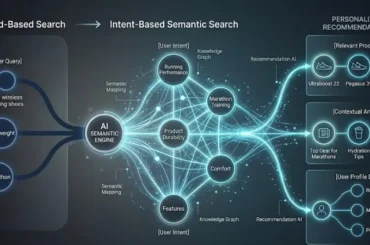
Search engines understand meaning better than exact phrases now.
That’s why writing naturally works better than forcing keywords. Explicit language, helpful explanations, and content that sounds like a real person wrote it are easier to understand-and easier to rank.
As search gets smarter, SEO is most effective when it focuses on context, not just keywords.
Why Rankings Alone Matter Less Than Before
For a long time, rankings were the scoreboard. If you ranked well, traffic followed. That relationship isn’t reliable anymore.
People often get what they need before they ever reach a website. Sometimes they still click, but it’s usually because they’re already interested rather than curious. So when traffic drops, it doesn’t always mean SEO failed-it often means the user reached clarity earlier.
What matters now isn’t just where you rank, but why someone would still choose to click. Rankings open the door. They don’t close the deal.
What AI Can’t Replace in SEO
AI is excellent at pulling information together quickly. It’s not great at earning trust.
There are parts of SEO that still need a human voice:
- Explaining trade-offs honestly.
- Sharing what usually goes wrong.
- Taking responsibility for advice.
- Showing real-world judgment.
When users choose a service, compare costs, or weigh risks, they look for reassurance. That usually comes from experience, not summaries. AI can inform the process, but it can’t replace the confidence people feel when they read something written by someone who’s been through it.
Also Read: Understanding the Debate & What Marketers Should Focus On
Why Experience-Based Content Is Winning
The content performing best right now doesn’t try to impress-it tries to help.
Experience-based content works because:
- It sounds real, not perfect.
- It admits limits and uncertainty.
- It explains outcomes, not just steps.
Readers can tell when something is written from practice instead of theory. As AI covers the basics, people spend more time with content that reflects lived experience. That kind of writing builds trust, keeps attention, and supports decisions-exactly what modern SEO needs to do.
Final Thought: SEO Isn’t Ending – It’s Getting Smarter
The conversation around AI and search often feels dramatic, but the reality is more practical. SEO isn’t disappearing; it’s evolving into something more intentional, more human, and more outcome-driven. As AI reshapes how people discover information, the brands that win will be the ones that understand intent, build trust, and guide users toward real decisions-not just clicks.
This is where experienced strategy makes the difference. At Straction Consulting, SEO is approached as a growth engine, not a ranking exercise. By aligning search behavior, content depth, and conversion psychology, their strategies are built to perform even as AI continues to redefine search. Because when SEO is done right, visibility follows-but meaningful business results come first.