
These days, search engines have stopped asking who wrote the content – they are asking why it deserves to be ranked. Now that artificial intelligence (AI) search results have started to make their presence felt to a greater extent in 2026, the real battle is not AI vs. human SEO content. It is between value and noise. In this blog, we will focus on how AI-generated content compares to human-written content in real-world search engine results pages (SERPs). We will also reveal the factors that actually determine rankings in this day and age. We will analyze in-depth what Google rewards and what it ignores.
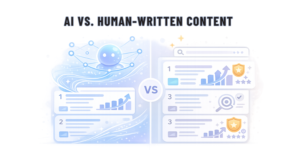
The Importance of ChatGPT with Regard to Search Engine Optimization (SEO)
In 2026, ChatGPT has become a fundamental component of SEO. It serves both as a discovery channel and as a productivity tool for practitioners. Its importance is the most evident in 3 areas – automation and productivity, generative engine optimization (GEO), and risk & strategy management.
The following table offers an introduction to how ChatGPT functions in these respects:
| Core Area | Components |
| Automation and Productivity | ~ Content Drafting and Ideation ~ Technical SEO Support ~ Metadata Optimization ~ Keyword Assistance |
| GEO | ~ Brand Visibility ~ Content Structuring ~ Citation Potential |
| Risk and Strategy Management | ~ Human-Centric Content ~ Verification ~ Competitive Analysis |
1. Automation and Productivity
- ChatGPT streamlines various SEO workflows that can otherwise take a lot of time to complete.
- ChatGPT helps generate topic clusters, initial drafts, and detailed outlines. This has significantly reduced the time from concept to publication. When it comes to AI vs. human SEO content, this is an essential factor.
2. GEO
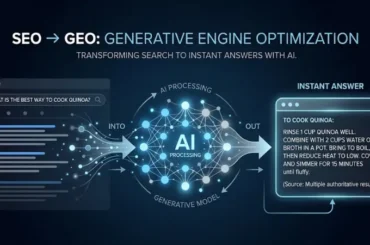
- More users are employing ChatGPT as a primary search interface through the platform’s integrated search features. This has helped SEO evolve, including GEO.
- When you optimize for ChatGPT, you ensure your brand is cited in AI-generated answers that drive high-intent traffic.
3. Risk and Strategy Management
- The role of ChatGPT in SEO has shifted from quantity to quality.
- Search engines like Google are prioritizing people-first, helpful content. If you are too dependent on AI output without proper editing, you run the risk of incurring penalties like scaled content abuse.
Comparison of ChatGPT with Google In Terms of Regular Search Volume
- In 2026, ChatGPT has become a major player in the search landscape, but Google remains the dominant force. The interaction between these two platforms is characterized by a split in search intent rather than a direct replacement.
- In terms of search volume and scale, Google processes almost 14 billion searches a day, bringing the total to over 5 trillion a year! On the other hand, ChatGPT handles approximately 2.5 billion prompts a day.
- Interestingly, data shows that using ChatGPT has not reduced overall Google usage. Instead, it has expanded total search activity. Users nowadays frequently use ChatGPT for multi-step, complex research, then return to Google for immediate news or specific transactions.
- Users typically spend more time on ChatGPT than on Google, underscoring its importance for tasks that require deep research.
Source: First Page Sage, as of December 19, 2025, and Neil Patel Facebook Post, as of November 2, 2025
Difference between ChatGPT Queries and Google and Bing Search Queries
- Right now, the difference between queries on ChatGPT and conventional search engines such as Bing and Google lies in how users ask questions and what they expect as answers. Bing and Google focus on retrieving links while ChatGPT emphasizes synthesizing information.
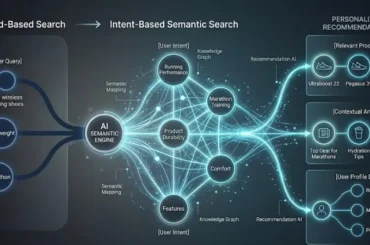
- ChatGPT queries are more full-sentence and conversational, while Bing and Google still predominantly handle keyword-based fragments.
- ChatGPT offers single, unified answers synthesized from multiple sources. However, Bing and Google provide ranked lists of various types of content that users can evaluate and use as needed.
- ChatGPT queries are usually generative and creative and call for deep research. On the other hand, Bing and Google queries are navigational, transactional, and based on quick facts.
- Bing and Google depend on experience, expertise, authoritativeness, and trustworthiness (E-E-A-T), technical SEO, and backlinks. But ChatGPT focuses on direct relevance and alignment of intent. It often cites pages that might not even rank in the top 100 on conventional search engines.
Competition between Google AI Mode and ChatGPT
- The competition between ChatGPT and Google AI Mode has evolved from a race for raw intelligence to a battle for user workflow intelligence. ChatGPT may have refined its interface, but Google is using its ecosystem to reclaim significant market share.
- Ever since Google launched Gemini to power AI Mode, its market share has steadily grown compared to ChatGPT. This is even more evident after Gemini 3 was introduced in late 2025. However, despite its decreasing chatbot market share, ChatGPT still holds a lion’s share of the market.
- Google has integrated the AI Mode directly onto its standard search bar for over 2 billion monthly users. But ChatGPT search works as a premium and separate research tool.
- Google AI Mode is also much better than ChatGPT at search and indexing. Google delivers fast results with direct access to its live index. On the contrary, ChatGPT’s capabilities are only moderate in this aspect. It is slightly slower than Google and uses a conversational synthesis approach that may lag real-time news by hours!
- Starting in 2026, Google AI Mode began performing autonomous tasks, such as reserving restaurant seats or booking appointments, directly from the search interface.
Why AI Search Is Not an SEO Kill Switch but Another Layer of Visibility
- AI is not an SEO kill switch but a structural evolution that adds a fresh layer of visibility. It reduces conventional blue link clicks for generic queries while creating an answer layer where brands receive high-authority placement through recommendations and citations.
- In traditional SEO, the goal is to rank among the top 10 search results. However, in AI search, the goal changes to Answer Engine Optimization (AEO) – being the specific source that AI uses to synthesize its response.
- Being cited in a ChatGPT response or an AI overview can build massive brand trust. Users consider such citations as seals of approval from AI, leading to higher-quality, high-intent traffic even when total click volume is lower.
- AI search engines do not invent information. Instead, they use Retrieval-Augmented Generation (RAG) to retrieve it from the internet. This implies that the traditional AI basics are the foundational layer for AI visibility.
- In 2026, brand influence is the new metric for success, not just organic traffic.
- If you want to win the answer layer – the new layer of visibility – with your SEO, your content needs to shift to Entity Clarity from keyword density.
How Can Straction Consulting Help You Win In Both SEO and AI Search?
In 2026, winning in search does not mean having to choose between AI and SEO – you can master both, and this is where we at Straction Consulting can help you. We blend AI-first content strategies with deep SEO fundamentals. This is how we help you rank high on search engines, influence AI search engines, and convert actual users. We help your brand stay ahead of algorithmic shifts and scale as you see fit.