If you have been in search engine optimization (SEO), you would probably have noticed that just publishing content no longer works – as frustrating as it may be, it is disturbing indeed! It is also disturbing that, even when you publish good content, build a few links, and follow best practices, your competitors keep outranking you. The worst part of all this is that it does not seem they are making much effort in that regard.
The reason for this often comes down to topical authority SEO. We will break this down in this blog so you have a clear idea of how it works and how it influences your ranking on search engine results pages.
What is Topical Authority? Explained in Simple Terms
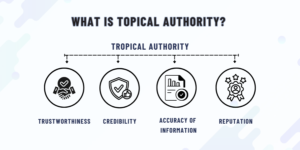
Topical authority is the perception that your website is a trusted and comprehensive source on a specific subject.
Topical authority SEO can help you rank not just because one article is well optimized, but because of these factors:
- You have covered the topic end-to-end.
- You have used internal linking to support the pages naturally.
- Your content answers all related questions.
- Search engines see consistent expertise signals in your content.
With topical authority, you become the destination for particular topics – it is not restricted to answering just one question.
For example, if your site wants to be a topical authority on email marketing, you would also need to cover these areas apart from a blog that focuses only on the core topic:
- Electronic mail (email) automation
- Email service provider (ESP) comparisons
- Deliverability
- Email marketing for software-as-a-service (SaaS), business-to-business (B2B), electronic commerce (e-commerce), etc
- Subject line psychology
This tells Google that your site really knows all about email marketing.
Why Has Topical Authority Become Even More Important In 2026?
Google’s algorithms have now matured far beyond simple keyword matching. In 2026, it uses advancements such as Helpful Content updates, AI-assisted ranking systems, and Experience, Expertise, Authoritativeness, and Trustworthiness (E-E-A-T) signals. As such, its focus has now shifted to depth, trust, and relevance.
These are the main reasons why topical authority has become more critical than ever in 2026:
- It future-proofs your SEO.
- It boosts rankings across multiple keywords.
- It improves artificial intelligence (AI) search visibility.
- It builds brand credibility.
All these benefits work in different ways.
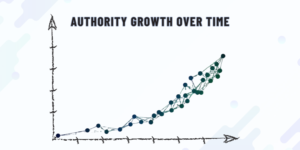
For example, keyword-focused tracks break whenever the algorithm changes, but topic-based authority compounds over time.
An authoritative topic cluster can rank for hundreds of mid- and long-tail queries. Often, you do not have to create separate pages for that.
Keywords vs. Topical Authority – The Shift in Strategy
Let’s be clear about something from the beginning.
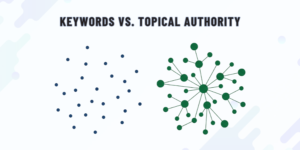
- Topical authority does not replace keywords – it reframes how you use them.
- Earlier, SEO professionals used to find a keyword, write an optimized article, build links, and hope it would rank.
- These days, they identify topics, map each keyword in a structured ecosystem, publish interconnected content with intent alignment, and let authority do the heavy lifting.
- So, with the modern approach, keywords became the signal rather than the strategy itself.
The Core Elements of Topical Authority
If you want to build topical authority intentionally, you must make these four elements work together:
- Topical Depth: You must cover all subtopics, from beginner to advanced, and from informational to commercial.
- Search Intent Alignment: Each page must serve a specific purpose – informational or navigational, commercial or transactional.
- Internal Linking Structure: Pages must reinforce each other logically instead of randomly.
- Quality and Consistency: The content should be explicit and deep. If the authority is not consistent, the content will fade for sure.
How to Build Topical Authority in 3 Months?
Execution is the most essential part of building topical authority in 3 months. For this, you need to follow a time-bound, proven framework that focuses on impact rather than volume. Here’s how you can do it.
1. Topic Mapping and Authority Blueprint
This is your work for the first month – focus on strategy instead of publishing. The three most important steps here are:
- Identifying the core topic
- Creating a topic cluster map
- Competitive authority gap analysis
You need to start with topics that are commercially defensible and relevant, where you can realistically build authority.
After this, you must create a topic cluster map. Here, you break the topic into:
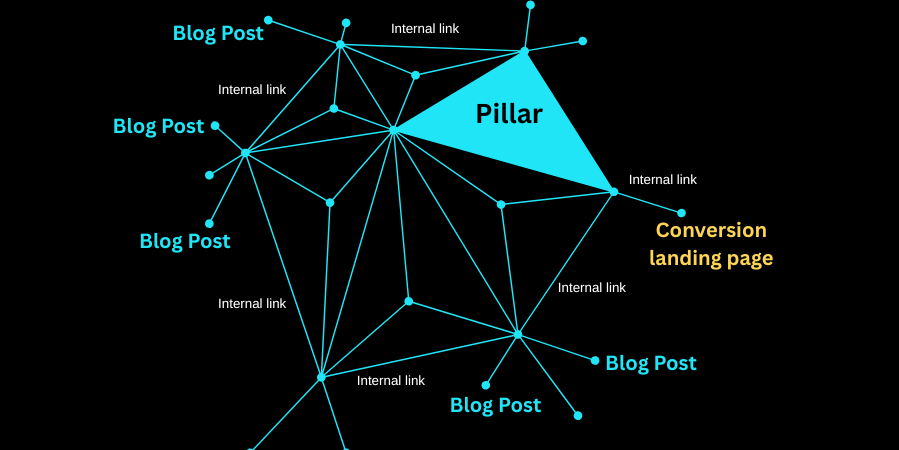
- Pillar pages – foundational and broad pages
- Supporting articles – focused and deep pages
- Comparison-based content and use cases
This map ensures the keyword is not cannibalized, that the content offers complete intent coverage, and that the content expands logically.
In the final step of this stage, you analyze what competitors are ranking for, what they have missed, and areas in your website with shallow content. This becomes your authority opportunity zone.
2. Content Creation with Intent Precision
This is the stage where you publish, but with discipline.
- You start this phase by building the pillar pages – high-quality, long-form pages that act as authority hubs. These pages cover the topic in full, link to subtopics, and are designed to rank for high-intent, high-volume keywords.
- After this, you publish strategic content strategically rather than posting randomly. In this stage, you release intent-matched articles, problem-solving guides, and decision-stage content.
- This stage makes sure that each piece answers a specific question within the topic ecosystem.
3. Internal Linking, Authority Signals, and Optimization
This is where the process of building authority begins.
- It starts with an internal linking architecture. You create contextual links that are not forced, clear content hierarchies, and strong pillar-to-cluster reinforcement. This helps search engines understand content relationships, page importance, and topic depth.
- After this comes content updates and optimization. At this stage, you refine the headers for clarity, user experience (UX) signals such as structure and readability, and entities and related terms.
- The final step of this phase is trust and credibility signals. Here, you strengthen the likes of author bios, first-hand insights, case studies, and clear indicators of expertise wherever applicable.
These signals are now more critical than ever.
How Do the Results Typically Look After 3 Months?
SEO is never constant, but typically, with these steps, after 3 months, you usually see the following benefits:
- Faster indexing
- Early authority recognition from search engines
- Multiple keyword rankings per page
- Strong foundation for compounding growth
- Improved topical visibility
The real payoff of such work comes in the following months when you have really established your authority.
Topical Authority Is a Long Game
Remember that topical authority is not just about publishing more.
- It is about publishing with purpose.
- When your content tells a total story around a topic, both users and search engines start to treat your brand as the expert.
- Once that happens, rankings become easier, traffic becomes steadier, and, finally, SEO starts to work with you rather than against you.
How Straction Consulting Helps You Build Topical Authority in 3 Months
topical authority framework is designed to help brands shift from scattered content to structured dominance.
We combine deep topic research, intelligent internal thinking, intent-led content creation, and the latest SEO signals to help search engines recognize your brand as a trusted expert in a short time.
We are equally adept at helping growing startups as we are at helping established businesses struggling to scale organic traffic. We focus on building sustained visibility that compounds over time.
Sources:
https://ahrefs.com/blog/topical-authority/
https://developers.google.com/search/docs/fundamentals/creating-helpful-content
https://www.semrush.com/blog/topical-authority/