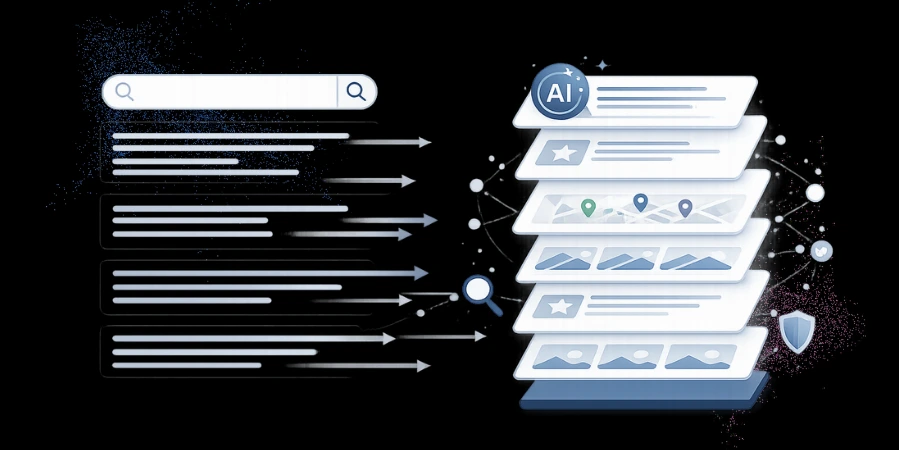
There was a time when ranking number 1 on Google guaranteed waves of organic traffic. But those days are fading, and fading fast. Today, search queries end without any clicks, and this proportion is only growing. This represents a seismic shift in how people use search engines and how brands must approach Search Engine Optimization (SEO). Welcome to the age of clickless search! Many marketers also refer to it as the end of the click economy in search. It completely rethinks how websites attract and retain traffic.
In this blog, we will examine what this shift means and explore its implications.
What Zero-Click and Clickless Search Really Means
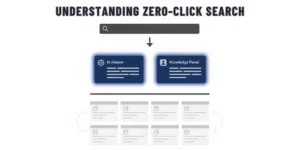
These days, users get their answers directly from search results – the term “clickless search” implies they do not have to click through to websites to get them. This happens because of enhanced Search Engine Results Page (SERP) features like Artificial Intelligence (AI)-generated summaries, knowledge panels, featured snippets, and local packs. In such zero-click interactions, users satisfy their information needs without ever visiting a site.
- It is estimated that almost 80% of searches in 2026 end without a click to external websites.
- Monthly data from 2025 shows that almost 60% of Google searches ended without a click- many trends suggest this will only rise.
- In search results with AI summaries, traditional click-through rates are collapsing – drops ranging from 40 to 60% are pretty standard in such cases.
All these numbers make it clear that rankings no longer guarantee traffic. In fact, in many cases, they would not even guarantee visibility beyond the SERP itself.
Sources: Click-Vision and Superprompt, as of January 23, 2026
Why the Click Economy Is Falling Apart
The click economy is faltering for several reasons, including search engines delivering answers directly, AI becoming the new search interface, and user preference for instant answers.
1. Search Engines Deliver Answers Directly
- Increasingly, search engines like Google are being designed to answer questions on the results page.
- AI overviews, knowledge panels, and featured snippets provide instant answers, so users do not have to click.
- These rich features prioritize speed and convenience, but they also significantly reduce conventional web traffic.
- For instance, in mobile searches, where most people search online, clickless search results account for a much higher share because concise answers attract user attention and take up more space.
2. AI Has Become the New Search Interface
- We are now moving from a list of links to an AI-powered conversation that aggregates information from multiple sources.
- These days, users interact with generative AI features such as Google’s Search Generative Experience, built-in AI assistants, and chatbots.
- These provide context-rich responses that reduce the need for further explanation.
- Now, users do not have to click through several blue links – they receive concise, human-like responses that often resolve their queries immediately.
3. Users Prefer Instant Answers
- User behavior itself has changed as well.
- Modern searchers prioritize convenience and speed over exploration.
- If users get answers directly from the SERP, most of them stop there and move on.
What This Means for Traditional SEO Traffic
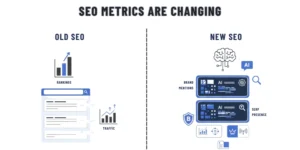
Your traffic model is at risk if you continue to focus solely on ranking highly in conventional organic listings. Clickless search is reshaping the SEO landscape in different ways. For example, clicks no longer guarantee visibility; conventional metrics are less meaningful; traffic is not the only goal; and SERP features are the new real estate.
1. Clicks Do Not Mean Visibility Anymore
Just because you rank at the top doesn’t mean users will visit your website. Users may view your page snippets, but may not click through.
2. Traditional Metrics Are Less Meaningful
Clicks, click-through rates, and impressions are no longer reliable indicators of success. Suppose you have low outbound visits; analytics tools indicate under-engagement. This makes brand visibility in AI a more crucial signal.
3. Traffic Isn’t the Only Goal – Brand Presence Matters More
Brand presence has now become more important than traffic. When AI frameworks answer questions, they often cite sources. Brand mentions within such summaries have become the new form of visibility.
4. SERP Features Are the New Real Estate
Instead of going for click-through, brands are now competing for places in the following:
- Featured snippets
- Direct answers and AI overviews
- People Also Ask boxes
- Maps and local packs
- Knowledge panels
Appearing in these elements can offer brand recognition and conversions even without visits.
How to Win In a Post-Click SEO World
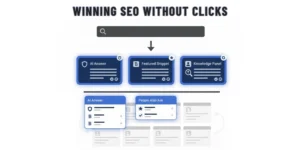
The rules have changed fundamentally. Forward-thinking brands are now using different strategies to adapt to the new landscape, such as the following:
- Optimizing for answerability
- Focusing on brand signals
- Leveraging structured data and schema
- Extending beyond the SERP
- Measuring what matters now
1. Optimize for Answerability
You have to structure your content in such a way that AI systems and search engines can extract and show your answers easily. Use clear headers, frequently asked questions (FAQs), concise answers, and schema markup to improve your chance of being selected for a snippet or rich result.
2. Focus on Brand Signals
Strong brand authority increases the likelihood that your content will be used, selected, and cited in AI responses, even when users do not visit your website. This also supports branded search growth.
3. Leverage Structured Data and Schema
Search engines understand your content deeply when it features structured data. You must also focus on this if you want to be featured in AI summaries and direct answer boxes.
4. Extend Beyond the SERP
You must publish content on different platforms from which AI gets its data, like LinkedIn, community sites, and YouTube.
5. Measure What Matters Now
Instead of page views and clicks, focus on brand mentions, voice search citations, impressions in search results, and share of answers.
Generative Engine Optimization: A New Era
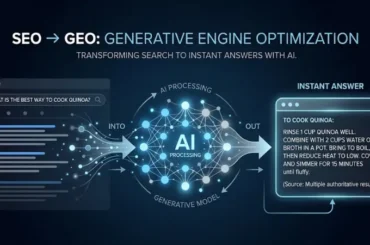
The shift to AI-powered search has created a new discipline: generative engine optimization, which goes beyond traditional SEO.
- GEO focuses on making your content trustworthy and answerable to AI systems.
- This, in turn, makes it easier for them to reference your content for relevant queries.
- GEO is not limited to just optimizing your content for keyword rankings.
- Nowadays, search engine visibility also means presence in AI answers.
- Sourcing and credibility have become more important than clicks, and brands with strong authority and structured, explicit content naturally dominate.
This is the future of search marketing – one where trust and visibility are now more important than plain click metrics.
Conclusion: Embracing the Clickless Future
Thus, the click economy is not just slowing down – it is transforming! As clickless search and AI-powered search become the norm, traditional SEO models are no longer sufficient. To be successful, you must optimize for visibility in answer engines, measure success beyond clicks, and prioritize authoritative and structured content.
At Straction Consulting, we help websites rise above such disruption by crafting answers and SEO-ready content that both AI systems and users can feature, cite, and trust. With our assistance, clicks are no longer essential for you. Our strategies ensure your brand retains its prominence in a search landscape where answers are more important than visits.