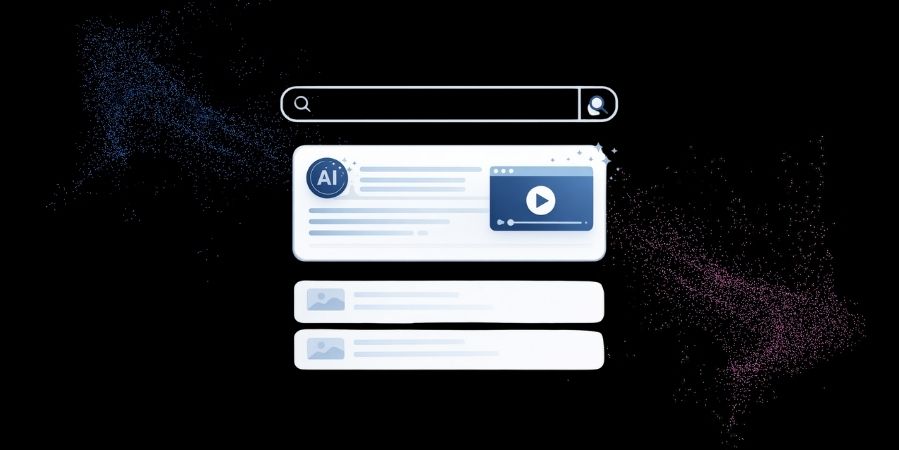
Artificial intelligence (AI) has fundamentally changed the way people find information online in the rapidly evolving digital search landscape. AI-backed tools such as Google’s AI Overviews, Perplexity, and ChatGPT do not merely provide a list of links, as conventional search engines do. Instead, they synthesize answers using data from credible websites.
Surprisingly, YouTube is the channel that most often dominates AI overview citations, though not always. In this blog, we will find out why YouTube is cited more than conventional websites in AI-generated search results. We will also focus on the most critical aspects related to this phenomenon.
What are AI Overviews and How do They Work?
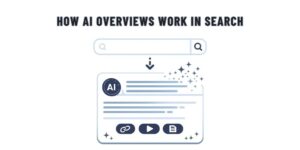
AI overview citations are precise AI-generated summaries that appear at the top of search engine results pages and in AI search interfaces.
- Rather than requiring you to click multiple links, these overviews synthesize and extract relevant information from trusted sources.
- They then present it in a digestible format and often include citations, such as video links, text links, and/or references to the original sources.
- Such an approach serves several important purposes, including providing instant answers and grounding your sources.
However, note that the sources that AI favors change significantly, as with every other technological shift, which makes YouTube’s growth particularly notable.
Data Does Not Lie: YouTube’s Citation Dominance
Recent research has shown that AI systems disproportionately cite YouTube in their search results compared with other websites. BrightEdge, an enterprise Search Engine Optimization (SEO) platform, reports that AI search engines such as Google AI Overviews, Perplexity, and ChatGPT cite YouTube 200 times more than any other platform.
For that, YouTube accounts for an average of 20% of all AI platform citations. In Google AI Overviews, this accounts for 29.5% of all citations, making it the top domain overall. This places it ahead of leading text-based authorities such as Investopedia and Mayo Clinic.
Source: Search Engine Land and MediaPost, as of October 1, 2025
Why YouTube Outperforms Traditional Websites in AI Citations
The following are the main reasons why YouTube performs better than conventional websites in AI citations overviews:
1. AI loves structured and accessible metadata
YouTube videos are rich sources of information, including captions and transcripts, engagement metrics, and extensive metadata.
- AI models can quickly index and read captions and transcriptions.
- YouTube provides rich metadata, including titles, tags, descriptions, timestamps, and chapter markers.
- Engagement metrics, such as likes and views, serve as implicit signals of quality and relevance in such scenarios.
- Such metadata makes it more convenient for AI systems to summarize and analyze video content.
- This provides such content with a major advantage over traditional websites that may lack machine-readable markup and/or structured video transcripts.
2. Visual content answers questions more quickly
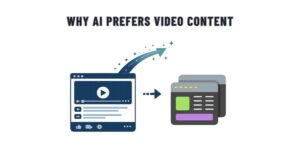
Certain kinds of queries – especially how-tos, tutorials, product demonstrations, and visual explanations – are typically answered more effectively through video.
- AI systems also recognize this and prefer videos when they must provide users with actionable, clear insights.
- For example, the best answers to queries such as how to fix a leaky faucet, the best way to assemble a device, and a Python tutorial for beginners are short YouTube videos rather than long text articles copied from blogs and other sources.
- As AI is designed to help users understand rather than find information, YouTube gains a significant advantage from its visual edge.
3. Authority and scale of YouTube
YouTube has been there since 2005 and has an enormous amount of professional and user-generated content.
- Its sheer size, containing millions of educational, informational, and tech videos, makes it an obvious target for indexing for AI systems.
- This applies even to independent platforms like ChatGPT and Perplexity, which are not technically or commercially associated with Google, which is also why they cite
- YouTube as the primary video source so overwhelmingly!
This shows that there is more to YouTube’s dominance in AI search results than its ownership by Google. It is about trust, accessibility, and scale.
4. AI Search is redefining authority
Websites such as academic journals, industry manuals, and reputable news outlets were once regarded as highly authoritative because of peer review and the editorial standards they followed.
- But AI considers other factors, such as user engagement, content utility and clarity, and relevance and recency, as forms of authority in searches.
- For many practical questions-specifically those involving how-to, consumer devices, and technical demos-YouTube videos are much more helpful to users than long textual blocks.
Traditional Websites vs. AI Citations: What’s Happening?
- Even as YouTube is surging ahead in AI citation overviews, conventional sites are seeing their roles diminish. This is not necessarily because they lack the requisite quality but because AI models prioritize clarity and format differently.
- A recent study found that only 34.5% of citations in Google’s AI health overviews are from reliable medical sources such as hospitals, academic institutions, and clinics. YouTube remains the leading source of citations, ahead of many medical sites.
- This indicates that AI is reshaping the overall logic of visibility.
Source: ALM Corp, as of January 17, 2026
What This Means for Content Creators and Marketers
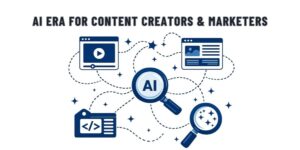
If you are still focused on traditional SEO in your content strategy, including writing blog posts, building backlinks, or optimizing titles, you are just capturing a part of the picture.
- If you want to succeed in the AI age, YouTube content is essential-structured video SEO matters and cross-format strategies must be considered.
- AI citations can now make videos a primary channel for visibility.
- Metadata, keyword optimization, and transcripts can help AI find your content and cite it.
- Video and text combinations increase the likelihood that your content will appear in AI search results.
The Downside: Misinformation and Quality Risks
The rise of YouTube in AI citations overviews is not without controversy, though.
- Since anyone can upload videos, AI models may show content that is not as rigorously vetted as conventional academic publications.
- Such risk becomes especially significant in domains such as wellness and health, where authoritative accuracy is essential.
- Some researchers argue that AI’s dependence on non-expert YouTube videos may contribute to misinformation if it is not balanced with trusted sources.
- Thus, high citation volume does not necessarily equate with quality. It implies visibility, and that is where strategic producers can shine.
Changing AI Visibility to Opportunity
- The new AI search landscape rewards content that has been structured for machine consumption and optimized across formats.
- It has to be helpful, accessible, and engaging.
- By combining innovative video strategies and conventional SEO best practices, you can become visible – or enhance your visibility – in AI citations overviews, voice assistants, AI-backed search aggregators, and conversational search tools.
Such a hybrid approach is the future of digital presence.
How Straction Consulting Can Help
Are you struggling to get your content noticed in the AI-driven search world these days? In that case, we at Straction Consulting can help you elevate your online presence on the platforms that matter most. This includes multi-platform visibility and AI overviews.
We fuse conventional SEO with advanced AI search optimization, including video strategies, content repurposing, and structured metadata. This ensures that your brand does more than reappear – it is cited. We can assist you with all platforms, such as YouTube and Google AI.