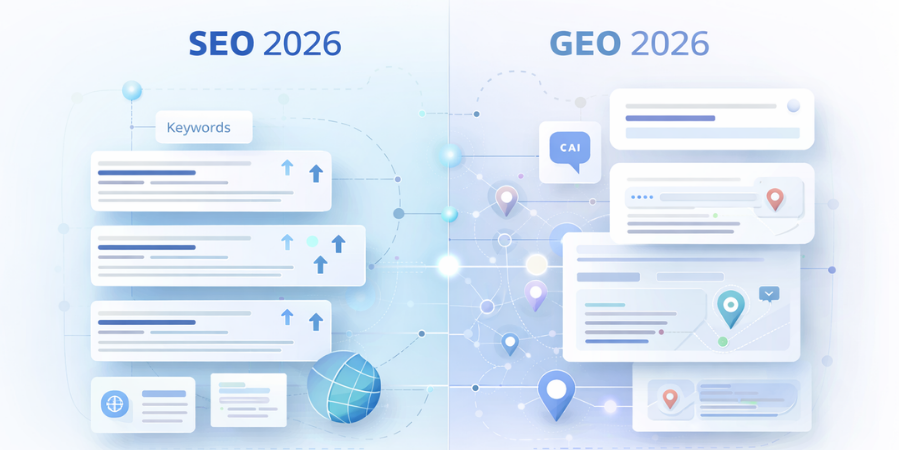
In 2026, marketers are talking about one thing the most – visibility. However, the landscape is changing at the rate of knots, and consumer behavior is constantly shifting. The growth of artificial intelligence (AI) search tools has further complicated matters. The question is no longer only about how they can get found. Instead, they are also thinking about the best avenues for such discoveries. This is where the buzz of Search Engine Optimization (SEO) and Generative Engine Optimization (GEO) begins.
Both aim to make you more visible online, but they work in different ways. You must understand their purpose to craft strategies that actually work.
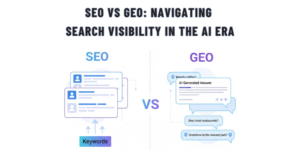
SEO – The Backbone of Search Visibility
SEO is the practice of optimizing your content and website so they rank higher in traditional search engines such as Google, Yahoo, and Bing when people search for related keywords. SEO is the foundational play that helps search engines understand your content and trust your brand. It then uses this understanding and trust to reward your brand with visibility on search engine results pages (SERPs).
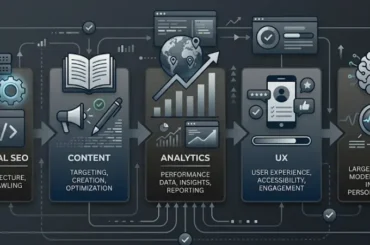
SEO is not only about keywords. It combines the following:
- Content Quality
- Backlinks
- Technical Optimization
- User Experience Features
All these factors entail different aspects of the SEO process. For example, content quality means answering user intent with engaging and high-value content.
Technical optimization helps with fast load times, clean structure, and mobile usability.
Over time, good SEO helps your site become an asset that attracts organic traffic for free – people finding you naturally through search.
GEO – The New Front in Digital Discovery
GEO is on the other side of this conversation. Apart from its usual complete form, it also refers to geo-location-based strategies, depending on how you use it. In digital marketing today, however, it is frequently about optimizing for location- and AI-specific user interaction.
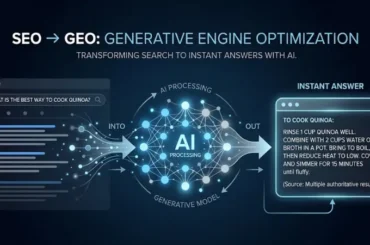
From an AI-focused perspective, GEO is about ensuring that your content is cited by and visible to generative AI engines such as ChatGPT, Google Gemini, AI Mode, and Perplexity. These engines do not show the SERPs that we are generally used to. Instead, they offer conversational and direct answers to your questions.
GEO looks to make your content part of such answers by using the following techniques:
- Factual Clarity and Clear Answers
- Citations and Mentions that AI Systems Pull into Responses
- Content Designed for Extractability, such as Frequently
- Asked Questions (FAQs), Tables, and Summaries
This shift shows that more people these days are asking questions in a conversational, natural way – and also that they expect immediate answers.
SEO vs. GEO: Key Differences You Must Know
When it comes to SEO vs. GEO, you should know how they differ in the digital scene today. Their main areas of difference are:
- Target Outcomes and Platforms
- Visibility Goals
- Content Strategy
- Traffic Behavior
- Time for Results
These areas work in different ways.
- For example, in terms of target outcomes and platforms, SEO aims for high SERP rankings and targets traditional search engines. It drives organic clicks to your website. However, GEO targets generative AI systems. It helps your content appear in direct answers rather than rank as links.
- The most prominent examples of SEO success include increased organic traffic, more substantial search presence, and higher rankings. But for GEO, they are brand mentions and citations in AI-generated answers.
- SEO thrives on deep-dive, keyword-rich content that is equally well-structured for human readers and algorithms. On the other hand, GEO focuses on concise, clear, and AI-friendly content that AI models can easily reuse and parse.
- SEO usually drives visits to your website, but GEO might reduce clicks as users get answers straight away from AI. However, when AI cites your brand, it becomes more trustworthy and visible. This leads to more branded queries and searches in the future.
Why Are Both Still Essential?
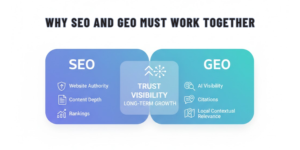
You must also understand this when you are trying to unpack SEO vs. GEO. You may think that these are competing, but that is because they do different things. However, in reality, the best digital strategies blend both these techniques.
1. SEO – The Long Game
SEO brings sustainable traffic over time by helping you create evergreen content and build your brand authority. Irrespective of how advanced AI gets, people still use traditional search engines every day. SEO provides you with a foundation of discoverability and credibility that both SERPs and AI recognize.
2. GEO – Modern Engagement
GEO is about being relevant wherever the user is. This applies when you talk about reaching local customers with location-based offers and generating visibility in AI systems. For example, it could be a restaurant that sends targeted offers when you are in the neighborhood. It could also be a product expert who is frequently cited in responses to AI queries on specific topics.
Both these examples show how GEO meets people where they are – conversationally and literally.
How to Select the Right Area of Focus In 2026
The one you choose between SEO and GEO depends on your situation. In fact, your situation will also dictate whether you choose both.
- If you are an online or global business, you should focus on SEO. When you optimize for search engines, it builds consistent traffic and reach over time. GEO can help you capture new types of visibility, but foundational SEO ensures your content is discovered in the first place.
- If you are a local store or service provider, you must focus on both geolocation strategies and SEO. You should optimize for “near me” searches, deploy GEO tactics, and build listings so your brand stays visible to AI platforms that manage visibility and reach customers nearby.
- If you want the latest playbook on this, you can blend both. Use SEO to build organic reach and authority. Use GEO to secure location-specific engagement and AI citations. This dual approach helps you dominate traditional results, real-world conversions, and AI responses.
Common Misunderstandings about GEO and SEO
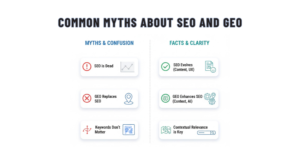
The biggest misconceptions about GEO and SEO are that SEO is dead, GEO is not just about local ads, and they are mutually exclusive.
- Some marketers are afraid that SEO will be rendered obsolete by GEO and AI search. However, that is not the case. Even generative AI typically draws from sources that search engines have ranked and indexed. Good SEO increases the chance that AI might see and use your content.
- In 2026, GEO focuses on making content AI-friendly rather than solely about geography. This means providing structured and clean answers that generative engines like.
- You may think that GEO is AI optimization and/or local targeting. However, both strategies overlap with SEO fundamentals such as clarity, structure, relevance, and quality.
How Straction Consulting Can Help You Manage Both GEO and SEO
At Straction Consulting, we are firm believers in the benefits of both GEO and SEO for sustained digital visibility. We integrate both of these techniques intelligently and strategically to help our clients the best.
Does your business need to improve its organic rankings? Does it need content that AI engines can trust? Does it need hyper-local engagement? No matter what, we unfailingly tailor solutions to meet contemporary search realities to the best of our ability.
We do so much more than chasing traffic – we help you own relevance, conversion, and authority.