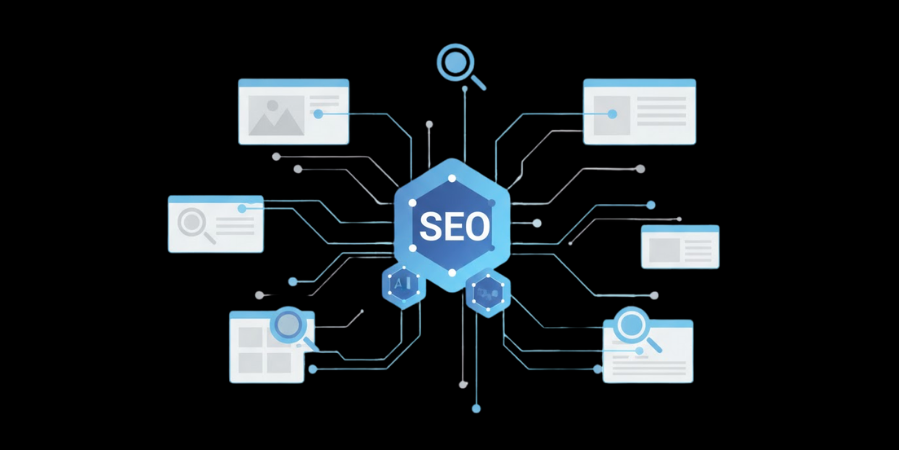
Traditional search engine results pages are now not the end-all and be-all of search. This is especially true given the current digital landscape.
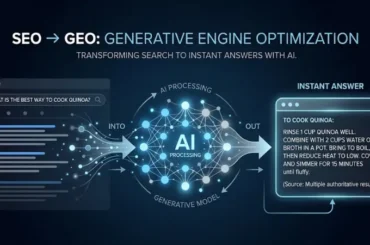
Generative search formats are becoming more important every day. This includes artificial intelligence (AI)-powered search interfaces like Google AI Overview. You can include chatbot assistants like Gemini and ChatGPT here, too!
In such situations, search engine optimization (SEO) has become more complex and dynamic. Businesses now have to optimize their content. They need to do it in a way that makes them visible in both traditional and AI-driven search results. They have to make sure that autonomous agents understand, reuse, and extract their content effectively.
Here, we will discuss what this shift means. We will also show you how to adapt your SEO strategies to succeed in this AI-driven search world.
AI SEO Agents – What Are They and Why Do They Matter?
- AI SEO agents are semi-autonomous or autonomous systems that use machine learning, real-time data analytics, and natural language processing to optimize and monitor SEO strategies. At times, they can execute such strategies on your behalf as well!
- Unlike conventional tools that offer only suggestions or reports, they can continue analyzing website performance and identifying gaps. They can also implement optimizations such as improving meta tags and fixing broken links.
- You can consider them to be intelligent assistants that help your site stay competitive. This is not only in conventional search rankings but also in AI-powered discovery. The latter is important as it is a much broader ecosystem.
Structuring Content for AI Extraction and Comprehension
When you think of optimizing your content for AI-driven search, this is the first step that comes to mind.
AI systems always prefer content they can reuse with confidence and extract easily for conversational answers and summaries. So, here are some tips that you can follow to optimize your content in this case:
- Use clear H1, H2, and H3 hierarchies to signal content relationships.
- Lead with direct answers to the questions users commonly ask.
- Keep paragraphs digestible and short.
- Use lists, frequently asked questions (FAQs), tables, and schema markup to complement your content.
Structured content helps AI understand not only what you are saying but also how different parts of your content connect.
Always place crucial answers and definitions closer to the start of your content, rather than burying them deep in the text.
Prioritizing Semantic Clarity Instead of Stuffing Keywords
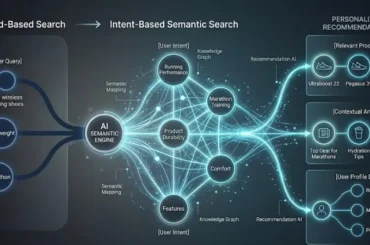
Traditional SEO typically focuses on repeating exact keywords. On the other hand, AI systems like semantic relevance, which means understanding meaning, contexts, entities, and relationships between concepts.
This means that:
- You must write in natural language that reflects how real users ask questions.
- You must avoid inserting repetitive keywords that do not add any meaning to the content.
- You must include synonyms and related concepts that convey the total scope of a topic.
AI systems nowadays are no longer limited to simple keyword matching – they use contextual clues to determine the relevance of your content.
Focusing on Intent: Knowing What AI and Users Want
AI search engines are increasingly focusing on evaluating user intent – they consider it just as important as content relevance. So, your content must answer the core questions users are likely to ask. This applies to all kinds of questions, including informational, navigational, and transactional.
If you want to optimize your content for intent, you must:
- Map out common questions asked by your audience.
- Ensure that headings reflect the way real users phrase questions.
- Design the content to answer the depth and breadth of intent, such as what, how, why, and when.
Optimizing for AI Visibility Instead of Just Rankings
Being visible on AI search engines means your content must be a source of answers for answer engine optimization (AEO) interfaces and AI summaries.
The most important strategies that you can use here are:
- Using structured data such as FAQs, article schema, and how-to, so that AI systems can categorize your content easily
- Ensuring content covers related topics in detail, which makes it reusable for broader queries
- Providing clear first-paragraph answers that AI agents can reuse
Such an approach helps your content show up in AI summaries, conversational interfaces, and chat-based responses.
Reinforcing and Building Topical Authority
AI systems always trust sources that cover the total length and breadth of topics. So, instead of generating many isolated articles, aim to create the following:
- Pillar content that covers core subjects thoroughly
- Strategic internal linking to reinforce semantic context
- Supporting clusters of related subtopics
Such a networked approach is relevant and helps AI agents associate your content with subject-matter expertise.
Using AI Agent Tools for Continuous Optimization
AI SEO agents can help you with tasks that used to be manual and slow. This includes the following:
- Automated keyword clustering and research
- Technical SEO audits, such as site speed, broken links, and crawlability
- Performance monitoring, including rankings, impressions, and engagements
- Content gap analysis to find unaddressed opportunities
However, you must keep in mind that, even though AI can suggest and execute, human oversight is essential to ensure the content aligns with the required brand voice, quality standards, and strategies.
Also Read: Best AI SEO Tools in the Market
Evolving and Monitoring Non-Stop with AI Metrics
- Traditional metrics such as traffic and rankings are still important. However, when it comes to AI-driven search, you must also measure inclusion in AI-generated answers and summaries, and the frequency of AI citations.
- Even as search experiences continue to evolve, AI visibility is becoming increasingly important.
- When you use both AI-centric and traditional metrics, you ensure you don’t miss any shifts in how users discover content.
Common Mistakes Hurting AI Visibility
No matter how experienced you are as an SEO professional, you could still stumble when adapting content to AI-powered search. For that, you must avoid these pitfalls:
- Writing only for high-volume keywords without addressing user intent
- Burying direct answers deep in long paragraphs
- Publishing thin content that does not have any context or depth
- Focusing only on traditional rankings instead of AI extractability
When you change your mindset and start being clear, structured, helpful, and intentional with your content, you help it perform better in both AI-driven and traditional search results.
Important Takeaway
Thus, SEO for AI agents is more about clarity, intent, structure, and semantic depth, rather than flashy hacks that serve no real purpose. AI-powered search systems look for content that is easily understandable, accurately summarizable, and reliably reusable across different interfaces.
When you get this right, it positions your brand for better rankings and also makes you more visible in the answers that users see first whenever they ask something on the internet. This applies to search snippets, conversational assistants, and AI summaries.
How Straction Consulting Can Help You with SEO for AI Agents
We at Straction Consulting are specialists at bridging the gap between next-gen AI visibility strategies and traditional SEO. We help our clients optimize their content for AI agents by focusing on key areas, including semantic structure, ongoing AI-focused performance tracking, and schema markup.
We can help you be included in AI Overviews, enhance overall search visibility across both AI-powered and traditional environments, and improve your entity signals. We tailor strategies to make your content more valuable and discoverable to both autonomous agents and human users.